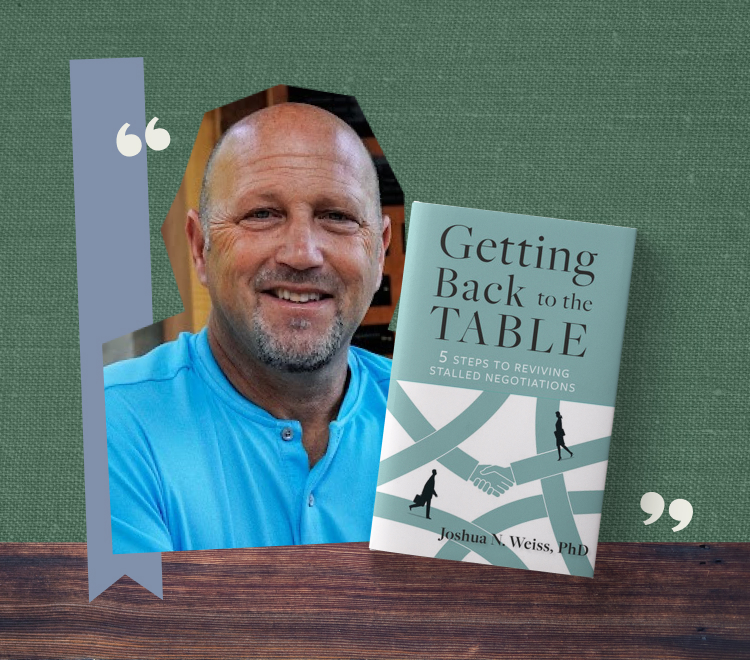
Why the ABK Team loves this book:
Even if we don’t consider ourselves to be negotiators, in Getting Back to the Table, Dr. Joshua N. Weiss demonstrates the many ways negotiation plays a role in our lives. From job offers, sales, or buying a house, Dr. Weiss identifies the behaviors and skills we need to be successful in these dialogues and explores a lesser-discussed aspect of negotiation — failure.
As the cofounder of the Global Negotiation Initiative at Harvard University and a senior fellow at the Harvard Negotiation Project, Dr. Weiss walks us through five steps that involve analysis and introspection, learning the right lessons from past experiences, and problem-solving to return to the table better than when we left it.
Our three favorite quotes from the book:
“If you somehow have come to associate assertiveness with being greedy or feel that you are not worthy of asking for what you want, you need to unlearn that narrative and replace it with a new story. The new story is that to be an effective negotiator you must be assertive and push for what you need in a negotiation, or you will never receive it. ”
“We seek the best solution, not just the most obvious or quickest one.”
“Embrace your failures, cope with the losses associated with them, understand why they happened so you can genuinely learn from them, get back to the table, and continue on your pursuit to be the best negotiator you can be.”
Three questions for the author:
What’s one common negotiating tactic that, on the surface, seems smart but is rarely effective?
A common negotiation tactic that most people use that is very ineffective is relying too quickly and heavily on compromise. Many people compromise before they even understand what is really going on in a negotiation. Put differently, compromise produces expedient solutions, but not the best outcomes. If you want to avoid this trap, shift your mindset from compromising toward creative problem solving.
So many media moments show negotiation as zero sum and win/lose. Is the idea that all boats can rise realistic? If so, what’s one thing that most win/win negotiations have in common?
An “all boats can rise” approach is realistic in negotiations where the long-term relationship matters (85% of most people’s negotiations fit this category). Thus, relationships become the key determinant. Why? If negotiators can build relationships with each other, they are more likely to share information (a critical dimension), which helps move deals from good to great by maximizing the value involved.
How can we balance not immediately compromising on what we want while also maintaining a collaborative dynamic with our negotiation partner?
The best way to do this is to enter a negotiation with a curious mindset and to realize that you are always working with incomplete information. If we go into a negotiation with these things in mind we will naturally ask questions and gather valuable information that will help us later. This must be coupled with a flexible and adaptable mindset so we can react and respond to the new information we uncover.